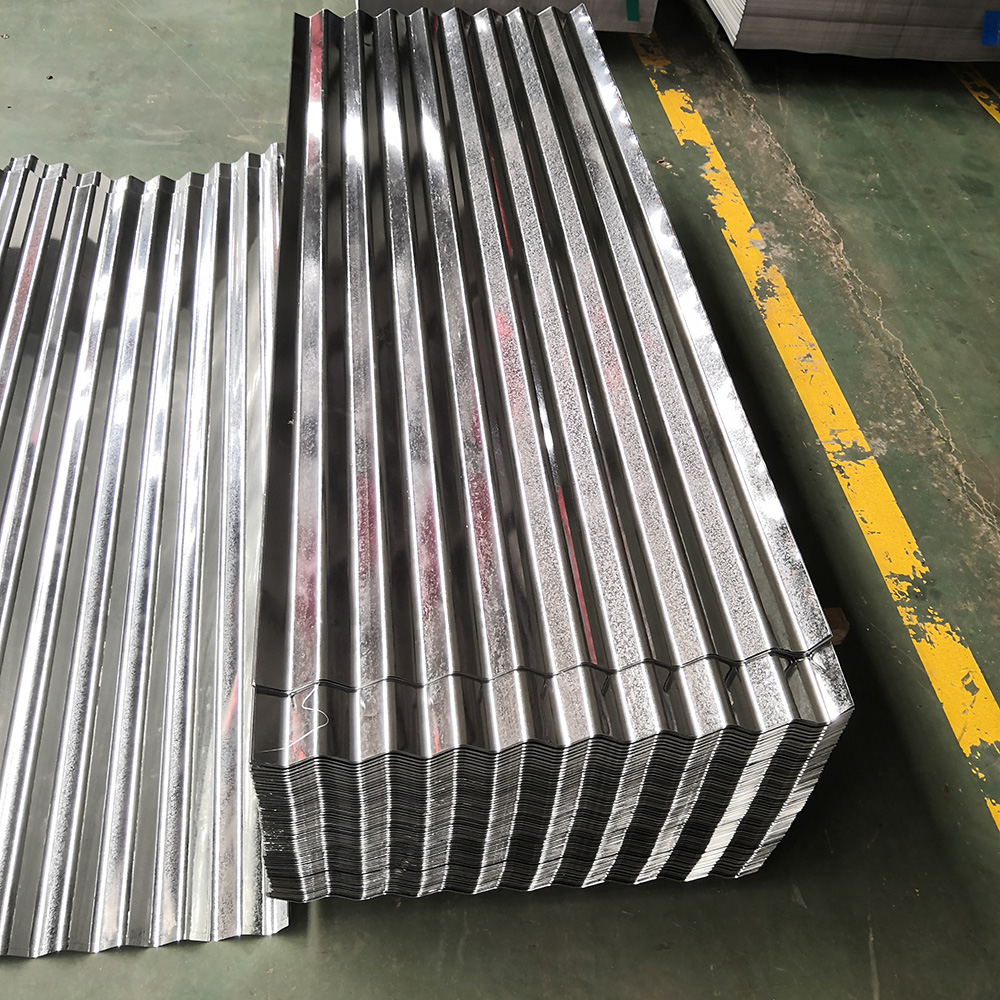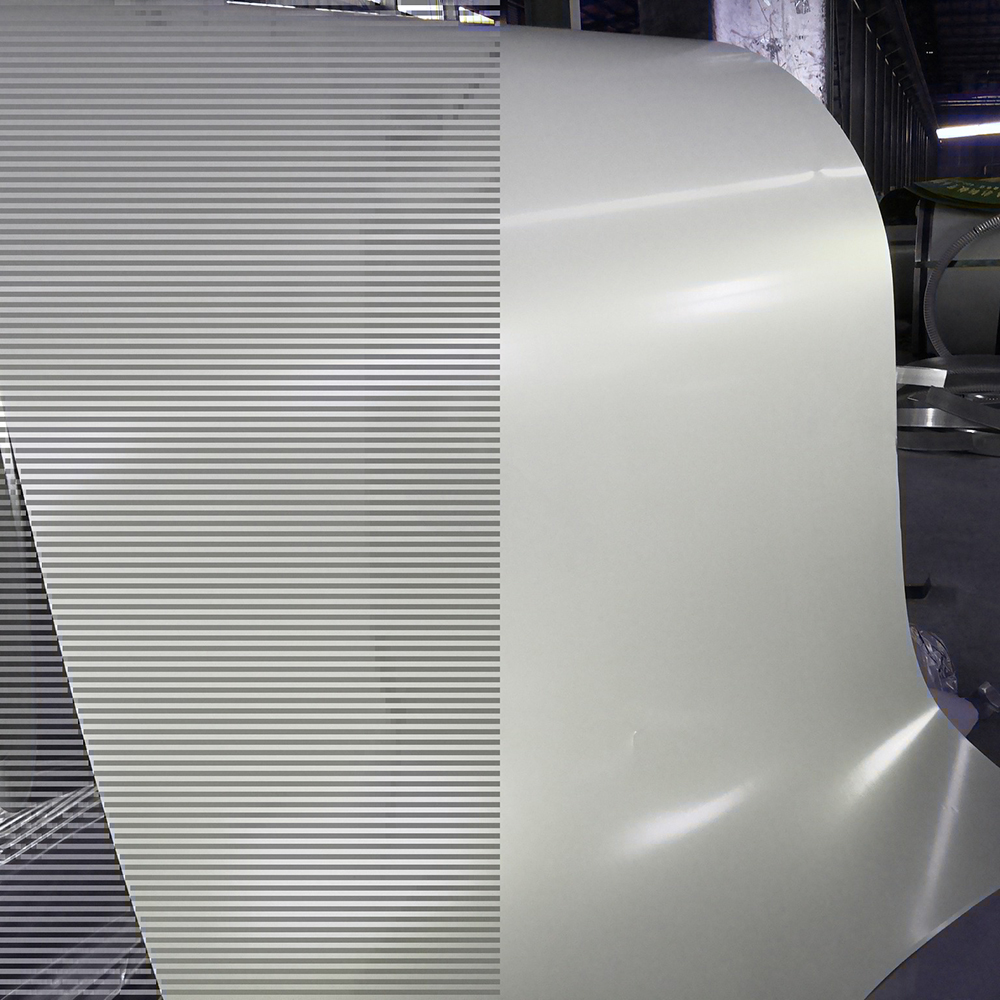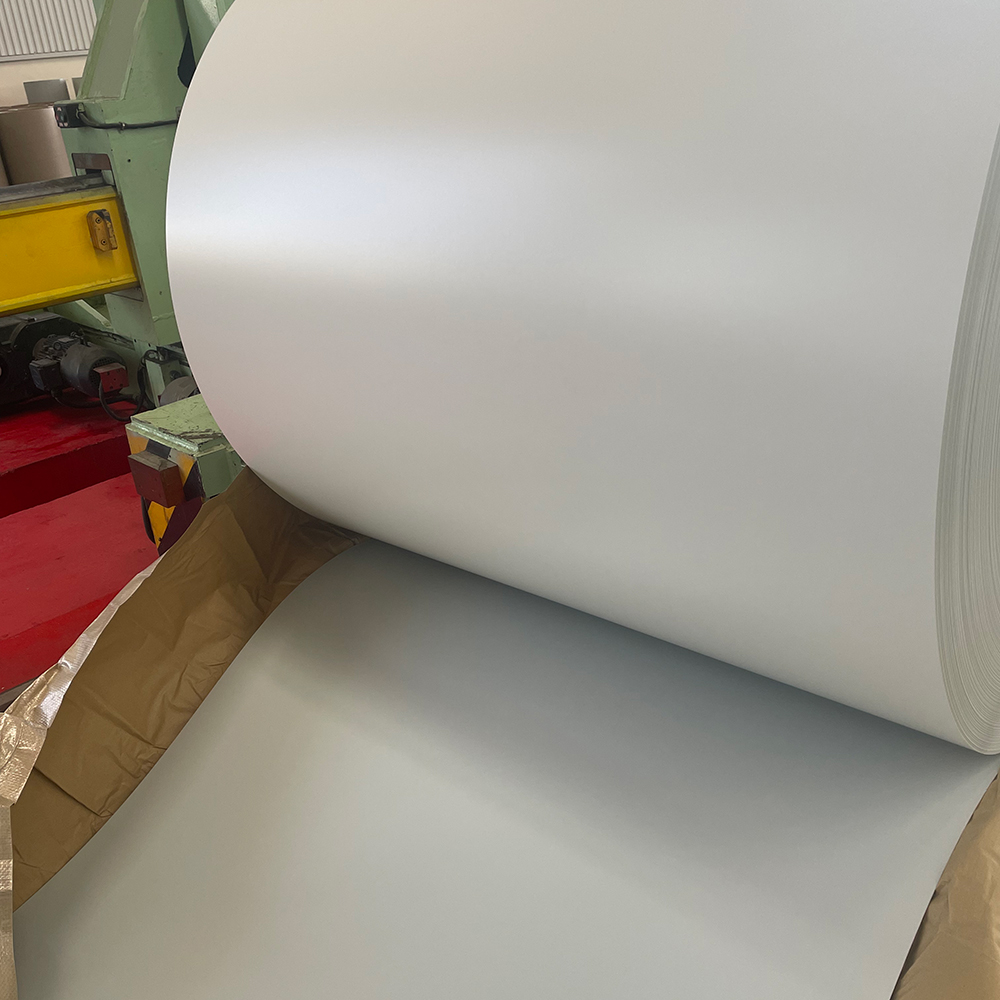

Fundamentally, this is usually due to suppliers cutting corners on two critical indicators: thickness and coating weight. Today, we will expose these two unspoken industry rules.
The base thickness of color steel plates directly determines their strength, stiffness and wind pressure resistance.
Take 0.5mm PE color coated plate as an example: its reasonable tax-inclusive market price is about $667 per ton. Yet some low-cost products are quoted at only $563 per ton — what’s the secret?
The Truth:The nominal thickness is 0.5mm, but actual measurements show only 0.42–0.45mm.
According to the national standard GB/T 12754, the allowable negative deviation for color coated plates is -0.04mm (meaning the minimum thickness for a 0.5mm plate is 0.46mm).
Substandard products generally exceed the standard deviation, sometimes reaching -0.08mm!
Consequences:
The plate surface is prone to dents and deformation under foot pressure.
Purlin spacing must be reduced, which in turn increases steel structure costs.
Wind uplift resistance is significantly reduced, creating a risk of panels being blown off during typhoons.
Recommendation:
During goods receipt, conduct on-site random inspections with a digital micrometer, take measurements at multiple points, and use the average value.
二、Nominal Zinc Coating 180g/m², but Actual Measurement Less Than 120g/m²
The zinc coating serves as the first line of defense against corrosion for color steel plates.
Some small manufacturers use recycled scrap steel to roll the base plate, resulting in poor surface cleanliness and weak zinc coating adhesion.
To cut costs, the actual zinc coating weight is only 100–120g/m², far below the nominal value.
Worse still, some use post-sprayed zinc powder to pass it off as hot-dip galvanizing, which rusts immediately when exposed to water.
Red rust spreads rapidly at cut edges and drilled holes.
Large-area rust spots appear within 3–5 years of use, affecting the service life and appearance of the building.
Failure to pass project acceptance, especially for government or state-owned enterprise projects.
Prioritize steel mills with a full industrial chain: hot rolling → galvanizing → color coating.
Avoid purchasing "private-label" products with unclear base plate origins.
Formal brands provide written service-life commitments, such as "PE coating no chalking for 15 years".Require clear specifications of base plate type, coating weight, coating type and film thickness.
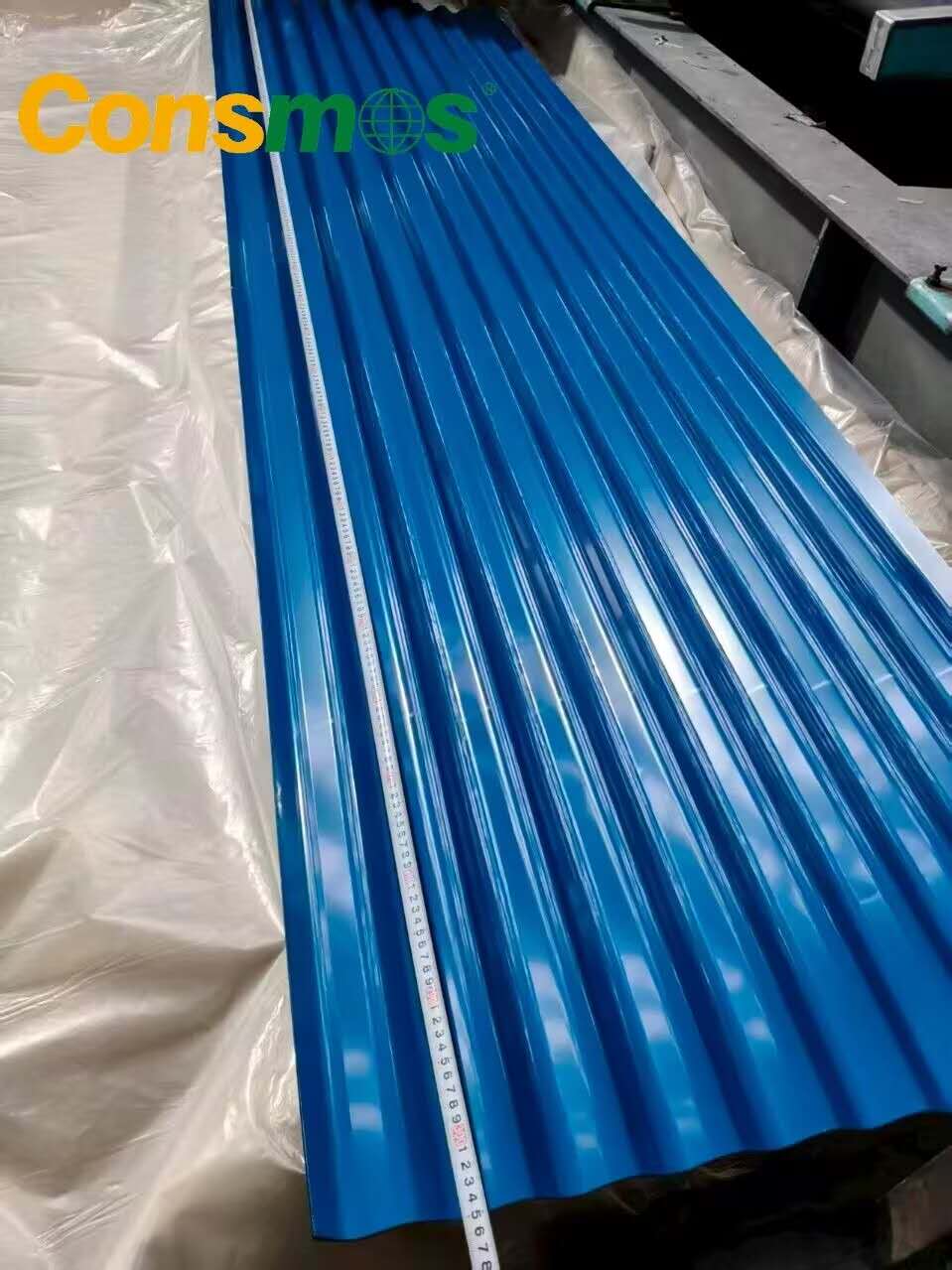
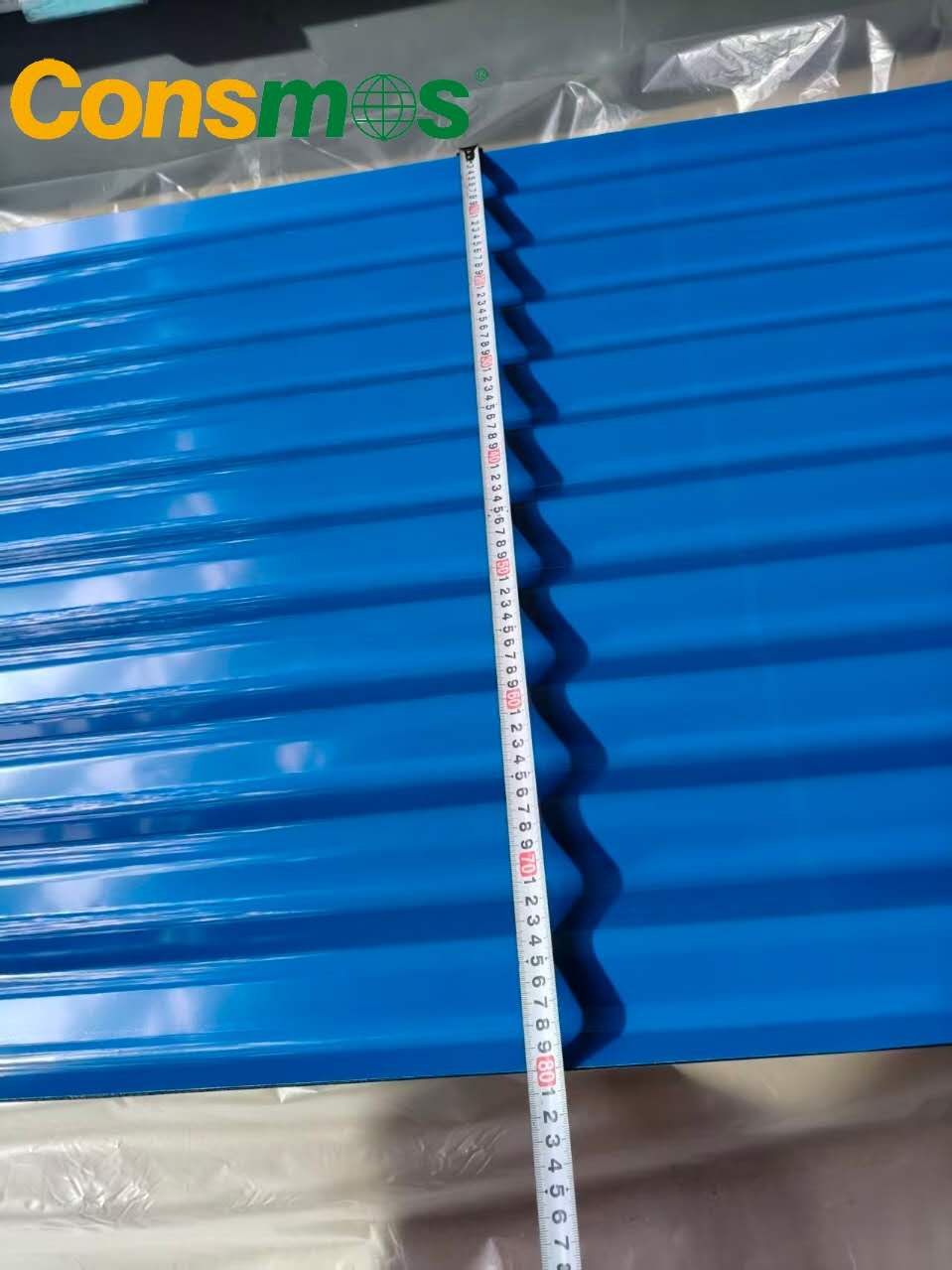
Request physical samples from the same batch as the order to test thickness, coating and color difference.
Compare samples from different brands; differences in texture, gloss and hardness will be obvious at a glance.
四、Conclusion: Saving a little now may cost a fortune later on color steel plate repairs
Although they play a supporting role, color steel plates are the building’s first barrier against wind and rain.
Every millimeter of thickness and every gram of zinc coating guarantees safety and durability.
Do not let low prices compromise the future of your building.
Quality materials stand the test of time; quality projects begin with wise choices.
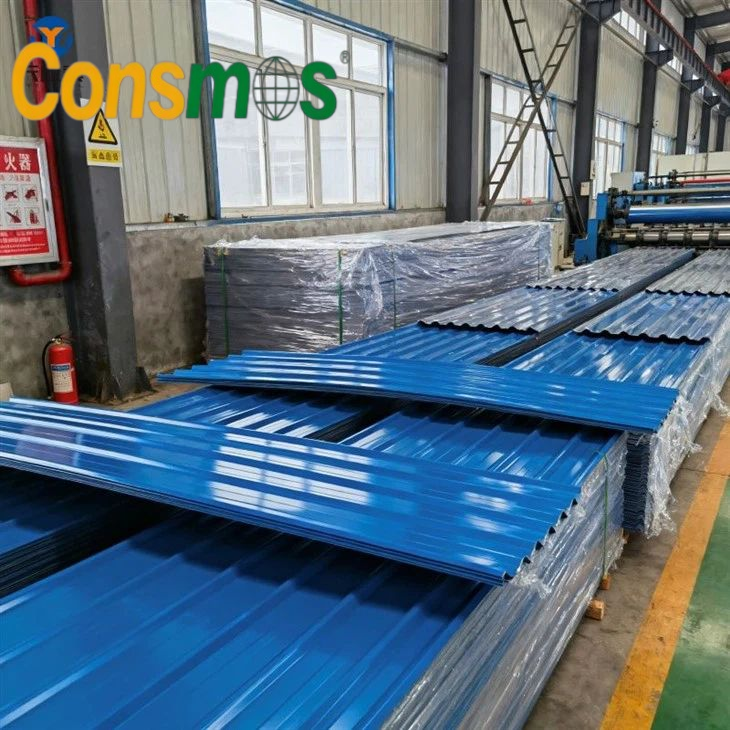
Linyi Consmos Metal Material Co., Ltd. specializes in exporting various products such as colored stone tiles, galvanized aluminum zinc, colored coated steel coils, aluminum coils, stainless steel, and tinplate
Please read on, stay posted, subscribe, and we welcome you to tell us what you think.